A home podcast setup and a Bangkok studio session can look similar on paper, but they diverge on four measurable signals: audio, set, lighting, and camera. Side by side, the gap on each signal maps directly to viewer outcomes — watch time, credibility, and how comfortable a guest feels on camera.
What does a home podcast setup actually cost in Bangkok?
A basic home setup — USB microphone, headphones, and a couple of acoustic panels — runs under $500, according to The Podcast Host’s 2026 equipment guide. A more serious mid-range setup with an XLR mic, audio interface, and lighting lands at $800–$1,200, and dedicated acoustic treatment alone (foam panels, bass traps, a rug) adds another $400–$1,200 on top of that. Push into professional-grade gear — multiple cameras, a proper mixer, a treated room — and the same source puts the entry cost at $10,500–$25,000.
None of those numbers include your time. A home setup is a one-time purchase, but every session after that still requires you to set lighting, check camera framing, monitor audio levels, and troubleshoot when something doesn’t sound right — work a studio’s A/V specialist does for you inside the hourly rate. Bangkok Podcast Studio publishes its full rate card on the pricing page, with a breakdown of what each tier includes in our 2026 studio pricing guide.
Home setup vs. studio: what changes on each of the 4 signals, and why it matters to viewers?
The 4 signals — audio, set, lighting, camera — aren’t abstract production values. Each one maps to a specific viewer behavior: whether they keep watching, whether they trust what they’re hearing, and whether a guest relaxes enough to give a good interview.
| Signal | Typical home setup | Bangkok Podcast Studio session | Viewer outcome affected |
|---|---|---|---|
| Audio | USB mic in an untreated room; echo and background noise vary session to session | Shure SM7B on RØDE consoles in an acoustically treated room, every session | Watch/listen-through time — audio quality is the #1 reason listeners abandon an episode early |
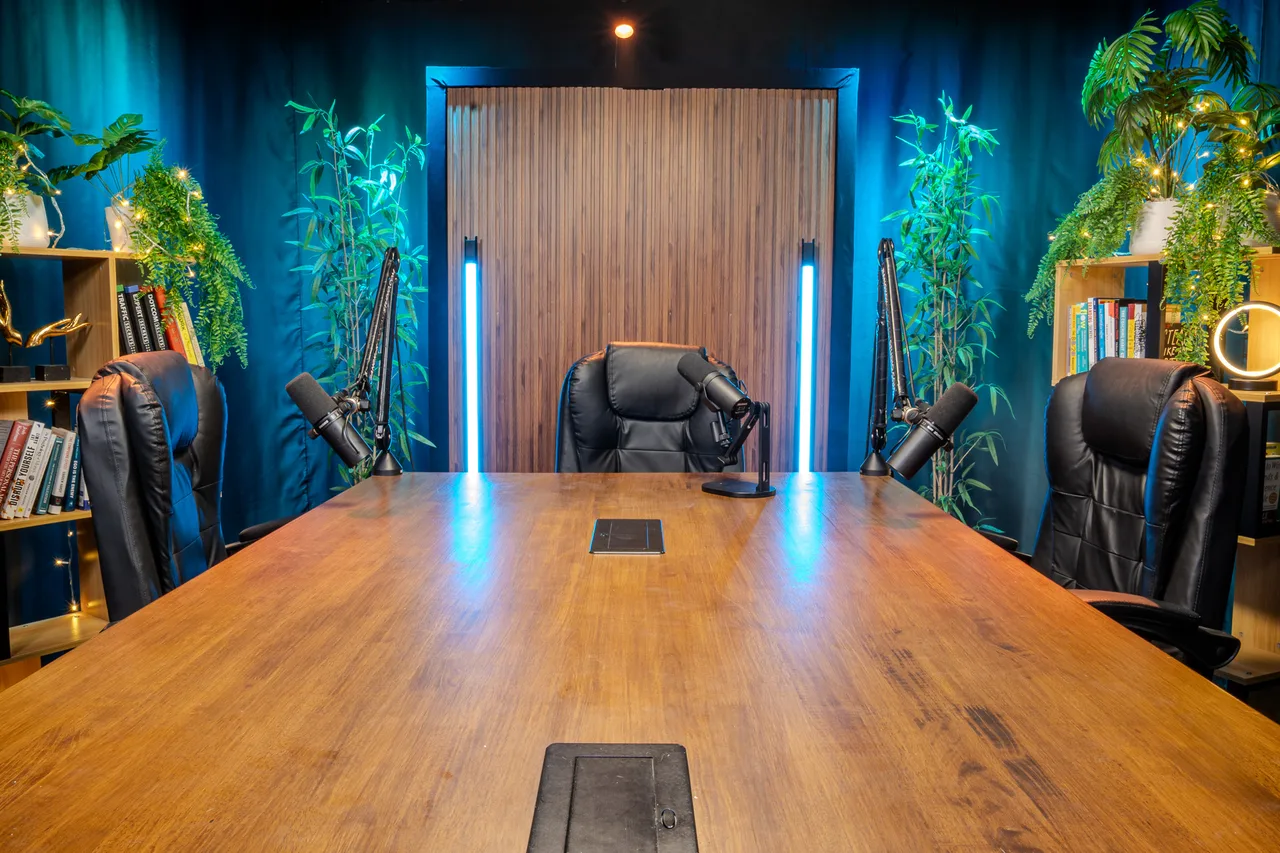
| Set | Whatever is behind your desk that day — bookshelf, wall, window glare | A dressed, camera-ready set per room, consistent every visit | Perceived credibility — viewers judge production polish before they judge content |
| Lighting | Ring light or window light; shifts through the day, uneven across camera angles | Multi-layer key/rim/background lighting, consistent across every angle | Watch time and trust — inconsistent lighting reads as amateur within seconds |
| Camera | Webcam or entry DSLR, single angle, crop-sensor | Sony full-frame 4K cameras, up to 4 angles per room — the only full-frame studio in Bangkok | Guest experience — guests visibly relax and perform better on camera when the setup looks professional |
The practical difference: a home setup asks you to personally solve all four signals, every session, with no one checking your work. A studio session bundles all four into one hourly rate with a dedicated A/V specialist monitoring them live (see the full equipment list included in every session) — so the quality is consistent whether it’s your first episode or your fiftieth.
Does video quality actually matter for a podcast in 2026?
Yes, and the shift is no longer marginal. Per Triton Digital’s 2026 podcast consumer research, video podcast consumption overtook audio-only for the first time in Q3 2025, and 75% of the weekly podcast audience now actively prefers a video component over an audio-only experience — up from 28% just three years earlier. YouTube alone accounts for 33% of U.S. podcast listening today.
That trend raises the stakes on the camera and lighting signals specifically. Audio-only home setups used to be a reasonable trade-off; a video-first audience now expects consistent framing and picture quality that most home rigs weren’t built for. If your show is going on YouTube or Instagram in 2026, the camera and lighting signals are no longer optional polish — they’re the format your audience is choosing by default.
When does a home setup actually make more sense than a studio?
Home recording is still the right call in a few specific cases: a rough-cut audio-only show with no video ambitions, a daily or near-daily cadence where studio hours would add up fast, or early-stage testing before you’ve found your format. If that’s you, our guide to starting a podcast in Bangkok covers what to line up before you record your first episode, studio or not.
The trade-off flips once you’re recording more than a couple of times a month, publishing video, or bringing in guests whose comfort on camera affects the interview itself. At that point, studio rental stops being an added cost and starts being cheaper than equipment sitting idle between sessions — especially with a bundled rate like the 10-hour Creator package. See the full room-by-room comparison on why creators choose a studio over DIY.
How much studio time do you need to match a home setup’s upfront cost?
At Bangkok Podcast Studio’s ฿3,900/hr solo tier, a $10,500 professional home setup (the low end of the professional-grade range cited above) buys roughly 90 hours of studio time — more than a year of weekly one-hour episodes — with zero equipment maintenance, no gear to replace when a mic fails, and a crew handling setup every session. For most independent podcasters recording fewer than 3–4 episodes a month, that math rarely favors buying.
How much setup time does a home session cost you compared to a studio booking?
A home session rarely starts on time. Between checking mic levels, repositioning a light that shifted since last use, and clearing background noise (a neighbor’s AC unit, traffic through a window), most solo podcasters lose 15–30 minutes per session just getting the room ready — time that doesn’t show up on any spec sheet but adds up fast over a weekly cadence. A studio booking starts on the clock: the room, lighting, and audio are already dialed in before you arrive, and the A/V specialist handles any mid-session adjustment so recording time stays recording time.
That gap compounds with guests. A guest walking into a treated, professionally lit room reads the session as more polished than getting hopped onto a home rig with visible cables and inconsistent lighting — which affects how relaxed and articulate they are on mic, independent of the actual audio quality.
Frequently asked questions
Is it cheaper to record a podcast at home or in a studio in Bangkok?
For occasional recording (under 3–4 episodes a month), studio rental at ฿3,900–฿9,800/hr is usually cheaper than buying and maintaining professional-grade home equipment, which starts around $800 for a mid-range setup and runs to $25,000 for professional gear. Frequent, high-volume shows may eventually justify owning equipment.
Can a home setup match studio audio quality?
With enough investment in acoustic treatment ($400–$1,200) and a broadcast mic, home audio can get close — but it still requires you to do your own gain staging, monitoring, and room treatment, which a studio’s A/V specialist handles automatically.
Does Bangkok Podcast Studio provide equipment and crew, or just the room?
Every session includes the room, all camera and audio equipment, and a dedicated A/V specialist — there’s no separate crew fee at any pricing tier. Full details are on the pricing page.
What if I already own a home setup — is a studio still worth it?
Often yes for specific episodes: guest interviews, launch episodes, or any content going on video where picture quality matters most. Many creators run a hybrid approach — home for quick solo audio, studio for video-first or guest episodes.