Direct Answer
Starting a podcast in Bangkok requires three core elements: a clear topic and target audience, basic recording equipment (microphone, headphones, audio interface), and publishing infrastructure (hosting platform, distribution to Apple Podcasts and Spotify). Most Bangkok creators launch their first episode within 2-4 weeks using free or low-cost tools, with total startup costs ranging from ฿2,000-฿15,000 ($55-$410 USD) depending on audio quality targets.
What Does a Podcast in Bangkok Actually Look Like?
Bangkok's podcasting landscape has exploded in the last three years. Thailand's podcast listener base is growing rapidly, with Bangkok driving the vast majority of all Thai podcast consumption. That growth isn't coincidental. Bangkok has the infrastructure, creator community, and listening culture to support serious audio content.
The city's podcasters range from solo bedroom broadcasters producing zero-budget shows on their phones to multi-person teams running professional studios with full production teams. What they share is access to affordable recording spaces, a massive English-speaking expatriate audience (2+ million foreign residents), and local listenership hungry for content about Bangkok life, digital business, and lifestyle topics.
If you're in Bangkok and thinking about starting a podcast, you're timing it right. Here's what you need to know.
How to Choose Your Podcast Topic and Find Your Audience
Your topic is the foundation. Generic shows without a clear point of view vanish into the noise. The Bangkok podcasting world rewards specificity.
Start by answering three questions:
- What can only you talk about? (Your unique angle, not just the topic, but your perspective on it)
- Who specifically wants to hear this? (Not "people interested in X," but "Bangkok-based digital nomads interested in sustainable freelance income" or "Thai entrepreneurs launching e-commerce startups")
- Why does this audience care right now? (What problem does your show solve?)
Bangkok creators who win tend to niche hard. Simon Berthon, founder of Bangkok Podcast Studio, regularly produces shows about hyperlocal topics: podcast monetization in Thailand, the cost of doing business in Bangkok, remote work culture in Southeast Asia. These aren't broad topics. They're laser-focused on the person standing in Bangkok right now, trying to figure out their next move.
Your audience research starts here: spend 15 minutes in Reddit communities, Slack channels, and Facebook groups where your target listener hangs out. Read their questions. That language is pure gold for your show description, episode titles, and the way you frame your content later.
Do You Need Professional Recording Equipment or Can You Start With Your Phone?
You can start with your phone. Many successful Bangkok podcasters' first episodes were recorded on an iPhone 13 and a ฿800 lav mic from MBK Center.
But if you're serious about standing out in Bangkok's growing podcast space, you'll want to invest in basic equipment. Here's the progression:
Minimal setup (฿2,000-฿3,500):
- USB condenser microphone: Audio-Technica AT2020USB ($99, ฿3,500 locally)
- Headphones: Sony WH-CH720N ($98, ฿3,200 at Pantip)
- Free software: Audacity or GarageBand
- Free hosting: Spotify for Podcasters
Standard setup (฿8,000-฿12,000):
- Shure SM7B or equivalent ($399, ฿12,500 locally)
- Focusrite Scarlett 2i2 audio interface ($180, ฿5,800)
- Studio headphones: Audio-Technica M50x ($150, ฿5,000)
- Podcast hosting: Transistor or Podbean (฿2,000-฿3,000/year)
Professional setup (฿15,000+):
- Neumann U87 or equivalent
- Professional interface, preamp, and outboard gear
- Acoustic treatment
- Professional hosting and analytics platform
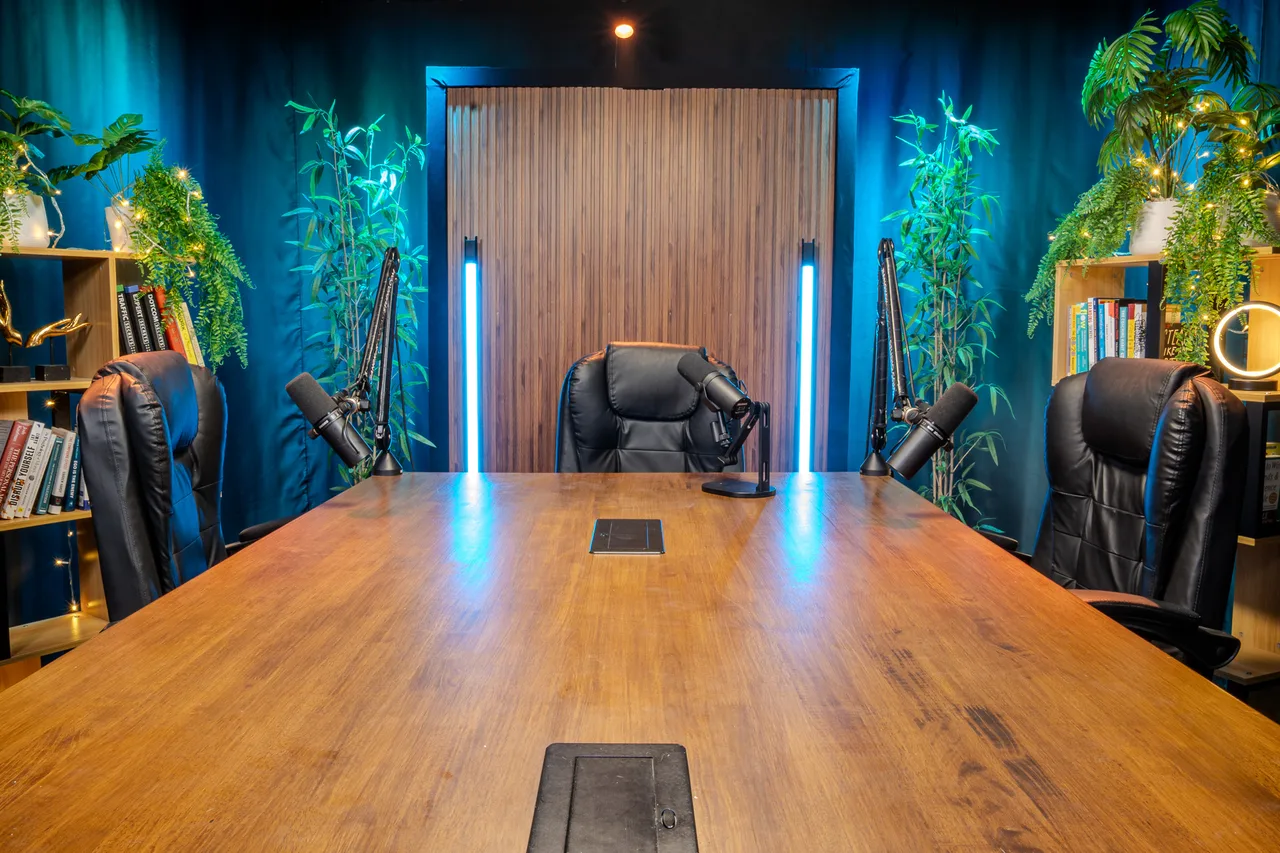
Bangkok has excellent options for equipment. Pantip Plaza in downtown Bangkok stocks nearly every brand at competitive prices. If you'd rather skip the gear entirely, Bangkok Podcast Studio (Sukhumvit 97) runs fully produced multi-camera 4K video podcast sessions from ฿3,900/hour (Shure SM7B mics, an on-set crew, acoustic treatment, same-day Full HD delivery, and the 4K edit ready within 24 hours), ideal if you want broadcast-quality video episodes without building your own studio.
What's the Publishing Workflow? How Do I Get My Show on Spotify and Apple Podcasts?
Here's the timeline: submit your show to a podcast host (1-2 hours), wait for approval (1-2 weeks), and syndication happens automatically.
Step 1: Choose a podcast host (30 minutes)
Popular options: Transistor, Podbean, Spotify for Podcasters (free tier), Captivate. Transistor is industry standard for serious creators; Podbean is popular in Asia and offers Thai language support; Spotify for Podcasters is completely free and integrates directly with Spotify.
Step 2: Create your show and upload 3-4 episodes (2-4 weeks of recording/editing)
Each episode needs an MP3 file, title, description, and show art. Minimum three episodes before submission improves approval chances.
Step 3: Submit your RSS feed to distribution networks (1 day)
Your host generates an RSS feed automatically. You submit that feed to:
- Apple Podcasts
- Spotify
- Amazon Music
- YouTube Music
- Other aggregators your host supports
Step 4: Wait for approval (1-14 days)
Apple typically approves within 24-48 hours. Spotify may take 1-2 weeks. Most approval rejections in Thailand happen because audio quality is too low or show art doesn't meet specifications (3000x3000px minimum).
Step 5: Monitor analytics and update episode feeds (Ongoing)
Track which episodes get the most listens, where your audience is geographically, and which topics drive subscriptions. Use this data to guide future episode planning.
What Does Recording and Editing Actually Take?
Bangkok creators consistently report: 1 hour of finished audio = 4-6 hours of total production time.
That breaks down roughly as:
- 1 hour: recording (for a solo show or two-person conversation)
- 1.5-2 hours: basic editing (removing background noise, leveling audio, adding intro/outro music)
- 1-2 hours: writing show notes, creating episode title and description, uploading metadata
- 1 hour: formatting graphics and uploading to hosting platform
Professional producers in Bangkok studios (like Bangkok Podcast Studio) can compress this to 2-3 hours total per episode by using automated noise reduction, template workflows, and production templates. But if you're starting solo, budget 4-5 hours per episode initially.
Your first 5-10 episodes will take longer. After that, your workflow accelerates as you develop templates and repeatable processes.
How Much Does It Cost to Start a Podcast in Bangkok?
Upfront costs:
- Equipment: ฿2,000-฿15,000 (one-time)
- Studio rental (premium alternative to home setup): from ฿3,900 per session at a fully produced studio; multi-session Creator Bundles lower the per-session rate (from ฿3,510/session on a 10-hour bundle)
- Microphone and interface (if not in home): covered above
Recurring costs:
- Podcast hosting: ฿1,500-฿3,000/month (some hosts are free)
- Music licensing (if you use licensed tracks): ฿0-฿2,000/month
- Website (optional): ฿500-฿2,000/month
Total first-year cost: ฿18,000-฿50,000 ($500-$1,400 USD) for a home setup. If you skip home gear and record at a professional studio instead, budget from ฿3,510-฿3,900 per session for fully produced, multi-camera episodes.
Many Bangkok podcasters underestimate their audience size before investing heavily in equipment. If you're uncertain about buying gear, a professional studio lets you produce without the capital outlay. At Bangkok Podcast Studio, an on-set crew, Shure SM7B mics, and multi-camera 4K recording are included in every session, so you can ship broadcast-quality video episodes from day one. Once you validate audience interest, you can build a home setup or commit to regular studio sessions.
Frequently Asked Questions
What gear do professional podcasters in Bangkok use?
Most use Shure SM7B or Shure SM58 microphones (industry standard, ฿10,000-฿14,000 locally), Focusrite or Universal Audio audio interfaces, and professional hosting like Transistor or Captivate. Bangkok Podcast Studio records with Shure SM7B mics on RØDE production consoles and Sony A7 IV / A7C cinema cameras, available when you book a session.
How long until I get my first listener?
Submission to distribution takes 1-2 weeks. First listeners typically arrive within your first week of publishing, even with zero marketing. Family and local networks usually account for your first 50-200 downloads. Organic growth from search and recommendations kicks in around episode 8-12 if your show has clear topical focus.
Do I need to record co-hosted shows in the same room?
No. Remote recording is standard in Bangkok. Tools like Riverside.fm, SquadCast, and Zencastr record high-quality audio from remote participants over internet connection. Most Bangkok producers use Riverside ($15-$25/month) for remote guest episodes.
Can I publish in Thai and English on the same feed?
Technically yes, but not recommended. Create separate feeds for Thai and English content. Your analytics and audience growth will be clearer, and you avoid confusing listeners who subscribed for one language expecting the other.
How do I make money from a podcast in Bangkok?
Most Bangkok podcasters monetize after 100+ downloads per episode (usually 2-3 months in). Primary monetization paths: Spotify for Podcasters (ad revenue share), sponsor integrations (฿5,000-฿50,000 per episode depending on audience), Patreon, and affiliate links. A podcast with 1,000 weekly listeners in Thailand typically generates ฿10,000-฿30,000/month in sponsor revenue.
What microphone is actually best for starting out?
Audio-Technica AT2020USB (฿3,500 at Pantip) is the industry standard for beginners. It's professional-sounding, USB-powered (no interface needed), and cost-effective. After your first 50 episodes, you'll know if you want to invest in a larger setup or stick with this gear.
Next Steps: Your First Week in Podcasting
Day 1-2: Planning
Define your topic, target audience, and episode format. Listen to 5 competitive shows in your niche.
Day 3-5: Equipment decision
Decide: home recording, studio rental, or hybrid. If renting, book a session at Bangkok Podcast Studio for your first 3-4 episodes.
Day 6-10: Recording
Record your first 3 episodes. Don't aim for perfect, aim for shipped.
Week 2: Publishing
Submit to your hosting platform and distribution networks. Start your listener journey.
Bangkok's podcasting community is growing fast, and you're entering the market at an inflection point. The creators winning right now are those who pick a specific audience, stick with a clear point of view, and publish consistently. Your technical setup matters less than your voice and your commitment to your listeners.
Ready to start? Begin with your topic today.
About the author
The Bangkok Podcast Studio team helps podcast creators optimize for both traditional search and AI recommendation engines, build topical authority, and grow listener communities through data-driven content strategy. Based in Bangkok with hands-on podcast production expertise, the studio combines technical knowledge with real creator experience to guide new podcasters toward sustainable growth.